Nivedita Bhadra, PhD
Computational Scientist
Modeling complex systems, from physics to the genome
Signal → sequence: from physical modeling to the genome
Latest Articles
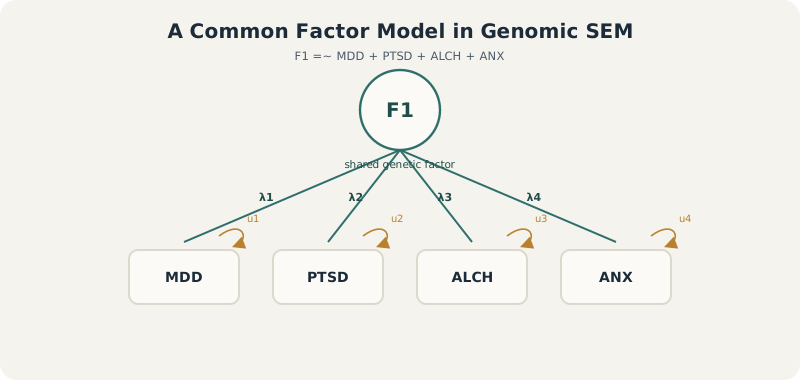
Multivariate Concepts in Statistical Genetics: From LD Score Regression to Genomic SEM
∇²ψ = 0 P(y | X) = σ(Xβ) β̂ = (XᵀX)⁻¹Xᵀy L = Σ (yᵢ − ŷᵢ)² h² = Vₐ / Vₚ dx/dt = σ(y − x)
Nivedita Bhadra is a computational scientist with a PhD in Physics from IISER Kolkata and an M.Sc. from IIT Delhi. She was trained in the mathematical and numerical modelling of complex systems, including simulation, statistical inference, and large-scale computation. That foundation has shaped her work across disciplines: first at the Translational Genomics Research Institute, where she applied high-dimensional statistical and machine-learning methods to biomedical data, and now at the Institute of Biological Psychiatry in Denmark, where she develops statistical genetics workflows for risk modelling using large-scale cohort data.
Whether the problem involves physical systems, genomic data, or text, her approach remains consistent: define the question precisely, identify its mathematical structure, build a reproducible computational model, and validate it rigorously against data.
This blog documents that process in the open. It brings together practical work in statistical genetics, machine learning, natural language processing, high-performance computing, and scientific programming, from models and mathematical derivations to pipelines, debugging, and reproducible implementation.
Her aim is to make complex computational methods easier to understand through clear explanations, practical examples, readable code, and honest notes from real research.

Computational Scientist
Areas I Write About
Statistical Genetics & Computational Biology
Liability-scale models, GWAS, polygenic scores, heritability, and large-scale cohort modeling.
Computational Modeling & Simulation
Numerical methods, statistical inference, and simulation techniques carried over from computational physics.
Machine Learning & NLP
Model evaluation, transformers, local LLMs, and applied text analytics for scientific data.
High-Performance & Reproducible Computing
HPC workflows, Snakemake pipelines, Dask, and reproducible research practices.
Subscribe / Follow
I’m still setting up a formal subscription option. For now, you can follow or connect here:
- GitHub: BNTechie
- LinkedIn: Nivedita Bhadra
- Medium: @nivedita.home
- Email: nivedita.home@gmail.com
If something helped you, feel free to share, comment, or connect.
Just a quick heads-up: while I am a tech professional at IBP here in Copenhagen, this blog is my personal playground. The ideas, tutorials, and opinions shared here are 100% mine and have not been reviewed or approved by my employer. Treat the code snippets and guides as educational resources—always test things in a safe sandbox environment before using them in production!